Ask most operations leaders what a day of absenteeism costs, and they will reach for a simple number: one day of wages.
The cost behind one missed shift
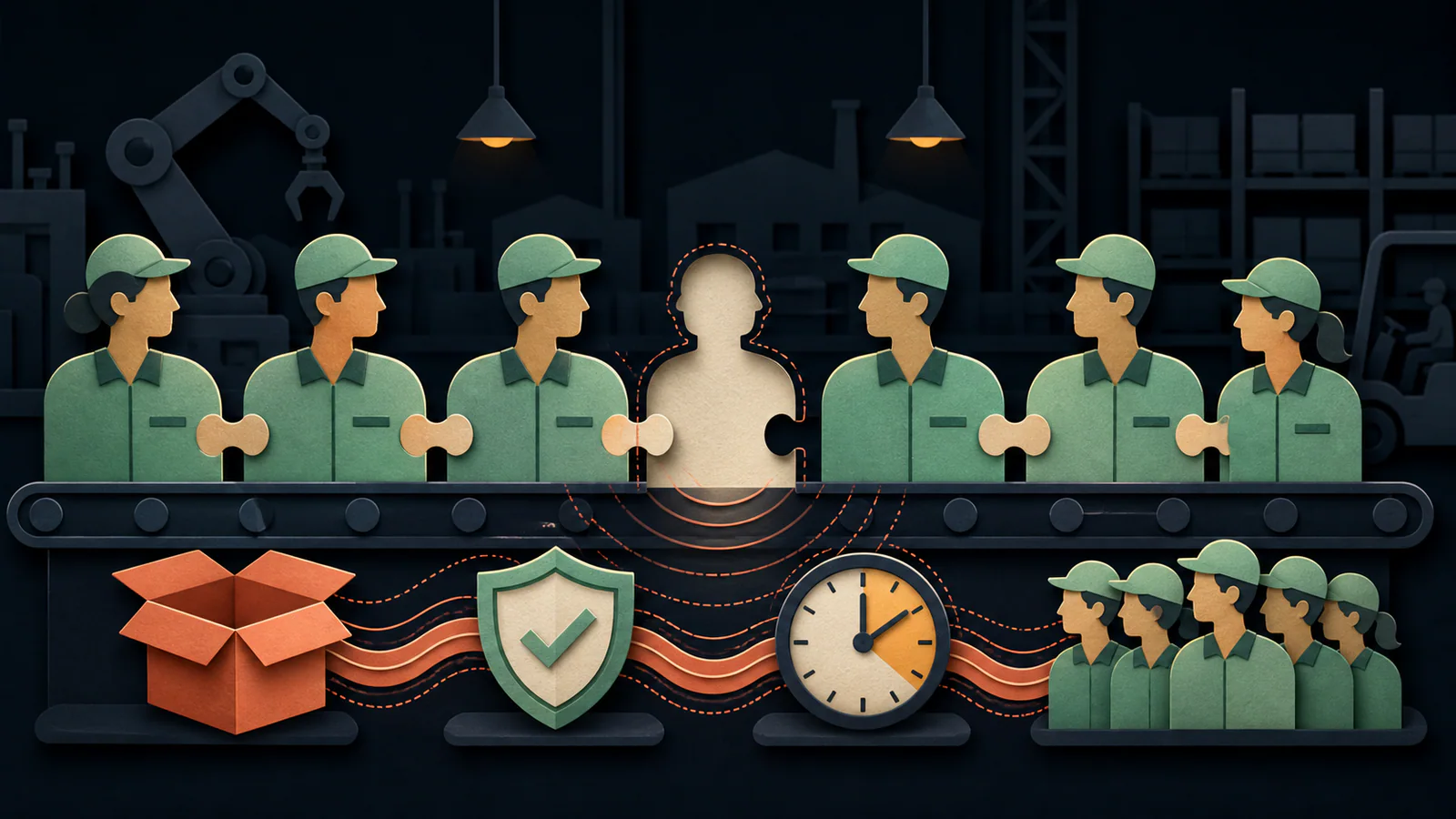
On a production line, in a warehouse, or on a project site, an unplanned absence ripples outward:
- overtime to backfill the shift
- slower throughput
- missed delivery windows
- the quiet erosion of morale among the people who stayed
When you add the downstream effects — client penalties for late delivery, rushed work that fails quality checks, and the management hours spent scrambling to reallocate labour — the true cost of a single chronic-absence problem can run to many multiples of the wage line.
Absenteeism is a lagging indicator
The deeper problem is timing. By the time absenteeism shows up in your attendance data, the underlying cause — burnout, an unresolved grievance, a toxic supervisor relationship, financial or family stress — has usually been building for weeks.
You are reading the smoke long after the fire started.
This is why reactive wellness programs so often disappoint. A helpline nobody calls, an annual survey nobody trusts, a benefit nobody remembers: none of these surface the signal early enough to act on it. What operations leaders actually need is a leading indicator — something that moves before the roster does.
What an early warning system actually measures
ManoYatra gives employees a private, judgment-free space to check in — in their own language, by text or voice — about how they are actually doing. Those check-ins roll up into aggregated, anonymized engagement trends at the team and department level. No manager ever sees an individual’s entries.
When participation in a particular cohort starts to slide, or when the aggregate tone of a department shifts, that is a signal you can see before it becomes an absence, a resignation, or a walkout. It is the difference between managing a crisis and preventing one.
From signal to action
The value of an early warning system is not the dashboard — it is the intervention it makes possible. A dip in a logistics team’s engagement might prompt a conversation with a supervisor, a review of shift patterns, or a targeted check on workload. Small, timely, and cheap, compared to the cost of losing trained people or missing a delivery.
A better operating model
The organisations that win here treat workforce wellbeing the way they treat predictive maintenance on their machines: monitor the leading signals, act early, and avoid the expensive breakdown. Absenteeism, seen this way, stops being an unavoidable cost of doing business and becomes something you can get ahead of.